


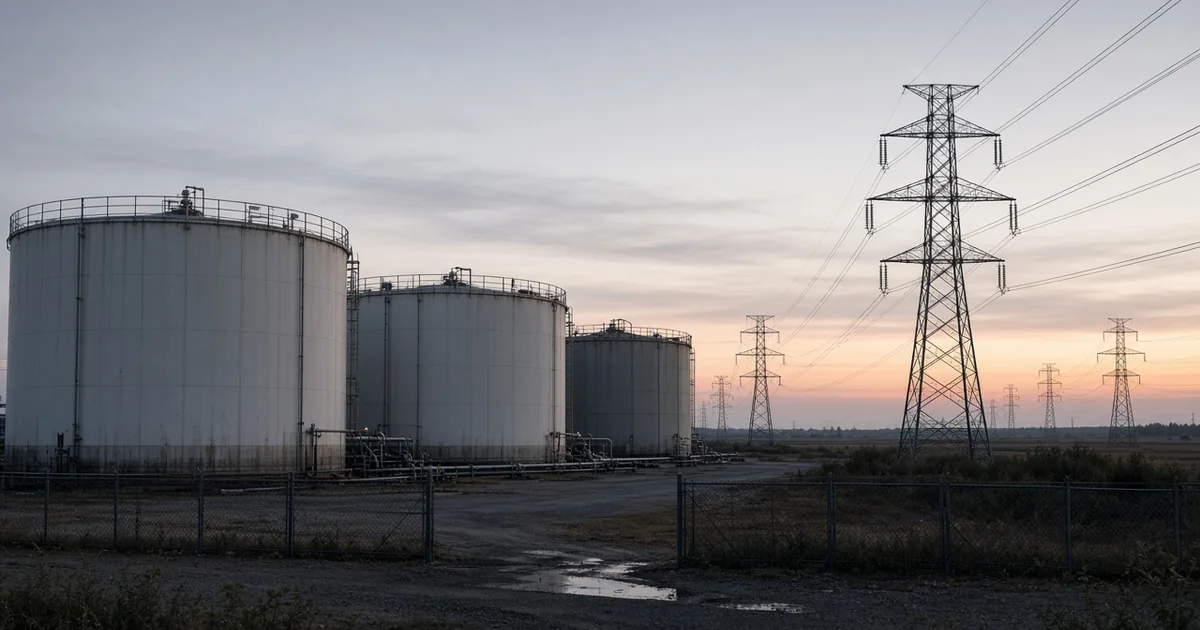
Washington/Kyiv/Berlin. The past weekend was one of the most tense for Ukraine in its relations with the US. First, President Donald Trump announced a deal with Russia on diesel fuel supplies despite sanctions, then publicly urged Ukrainians to elect a new president, and on Sunday claimed a so-called "energy truce" had been reached. Meanwhile, Russia continued its attacks on Ukraine's energy infrastructure. tagesschau reports.
Diesel from Russia Despite Sanctions
On Friday, October 9, Trump announced an agreement with Vladimir Putin: Russia is to supply the US and the global market with over 300,000 tons of diesel fuel, followed by another half million tons in November and a million tons "immediately after that." For comparison: according to the US Energy Information Administration (EIA), 300,000 tons cover US diesel consumption for only about 14 hours.
The main reason is domestic politics. Oil and diesel prices have surged sharply due to the war with Iran, which Trump, together with Israeli Prime Minister Benjamin Netanyahu, launched in February. Ahead of the November 3 congressional elections, Republicans fear losing their majority, and high diesel prices are particularly hurting farmers and truck drivers.
"It's Time for Ukraine to Get a New President"
The next day, Trump accused Volodymyr Zelenskyy of causing a diesel shortage with Ukrainian strikes on Russian refineries and demanded that Kyiv "immediately" stop them. He also stated that Ukraine is "time to get a new president" ready to sign a deal to end the war, and called for elections. Meanwhile, Trump did not mention that Russia started the war, and that Putin has repeatedly rejected unconditional ceasefire proposals. The Ukrainian Constitution prohibits holding elections during martial law.
Zelenskyy called the diesel deal "unfair and unjust." According to him, it is particularly outrageous that Trump's envoys, Steve Witkoff and Jared Kushner, were conducting negotiations with the Ukrainian delegation in Miami at that very moment without mentioning the deal with Putin. "Allowing Russia to sell oil products is an investment in the war," the president wrote on Telegram. Foreign Minister Andrii Sybiha publicly supported Zelenskyy, stating that the right to choose a leader belongs solely to the Ukrainian people.
The Declared "Energy Truce" — and New Strikes
On Sunday, October 11, Trump wrote on his Truth Social network that Ukraine and Russia had agreed to immediately stop attacks on each other's energy infrastructure. He had made a similar statement in mid-September, but both sides continued their attacks. Zelenskyy told Axios that he knew nothing of the agreement, but Ukraine is ready to accept it if Russia agrees as well: "We are waiting for details from the American side." Even before Trump's statement, he had proposed halting strikes on Russian refineries in exchange for an end to attacks on Ukraine's power grid.
However, already after the announcement, according to Zelenskyy, a Russian "Shahed" drone attacked a power plant in Kyiv, followed by strikes on energy facilities in the Kharkiv region. In Kharkiv, three people were killed and nine injured near a grocery store. In Ivano-Frankivsk, two people were killed, according to the mayor. Ukrainian drones, in turn, forced the temporary closure of all four Moscow airports in the evening.
Europe and Germany — on Ukraine's Side
French President Emmanuel Macron welcomed the idea of a "genuine energy truce." The European Commission stated that Ursula von der Leyen supports Zelenskyy's ceasefire demand, and the EU will discuss Ukraine's financial needs for next year and allocate additional funds for drones and missiles for air defense. New UK Prime Minister Andy Burnham expressed "unconditional solidarity" and promised to strengthen sanctions against Russia.
Berlin is also not changing course. "Support for Ukraine in its defensive struggle remains unwavering," said government spokesperson Stefan Kornelius. The Ministry of Economics emphasized that Germany fully complies with the sanction packages. Family Minister Karin Prien wrote about the diesel deal: "For a few liters of diesel. What moral bankruptcy." The head of the European Parliament's defense committee, Marie-Agnes Strack-Zimmermann, stated that by calling for Zelenskyy's resignation, Trump is siding with the aggressor.
What This Means for Ukrainians in Germany
For Ukrainians in Germany, the signal from Berlin is important: the federal government explicitly states that support for Ukraine and sanctions against Russia remain in effect regardless of Washington's position. Meanwhile, claims of an "energy truce" have not yet been confirmed by Moscow, so families in Ukraine should continue preparing for potential power outages this winter.
This article was prepared based on tagesschau reports from October 10–11, 2026. The text is an independent Ukrainian summary, not a literal translation.